
BY LETTER
Carbon Worlds

Adamean Type Worlds | |
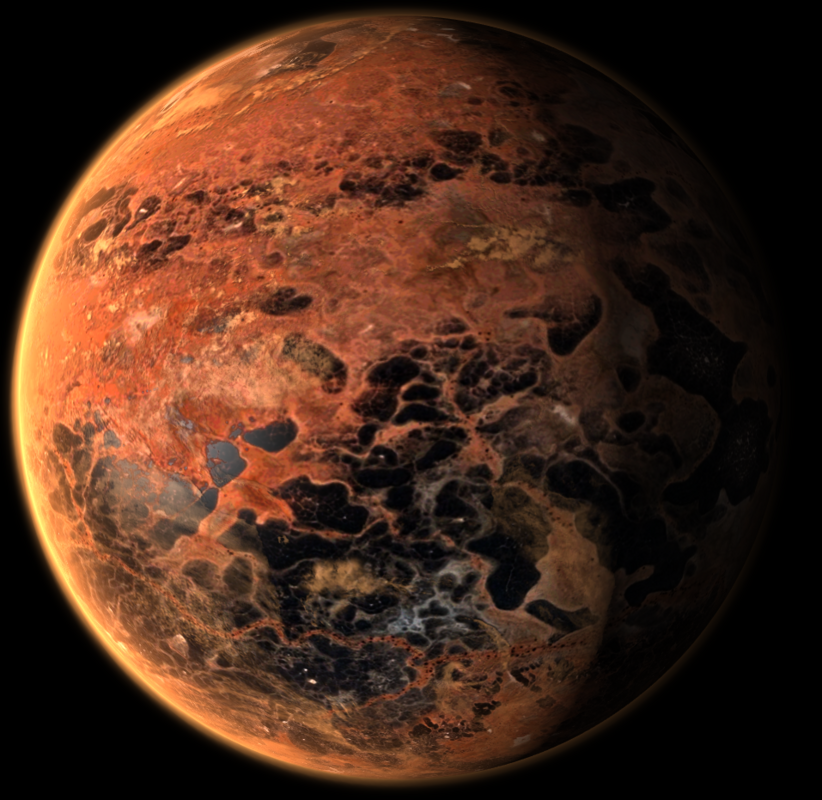 Image from LordOther | |
| Carbon-rich Terrestrial worlds | |
The resulting worlds also lack water, since H2O reacts with metal carbides. Any water-ice impactors that arrive will react with the carbides already present and produce hydroxides and methane. Steam from the impactor also reacts with graphite in the crust to release hydrogen and carbon monoxide.
A large carbon world generally has a lower crust or upper mantle of compressed diamond, which conducts heat readily and allows the core of the planet to cool more rapidly than a silicon-rich world with an equivalent mass. The cool core can only produce a weak magnetic field, an effect which leads to increased atmospheric loss.
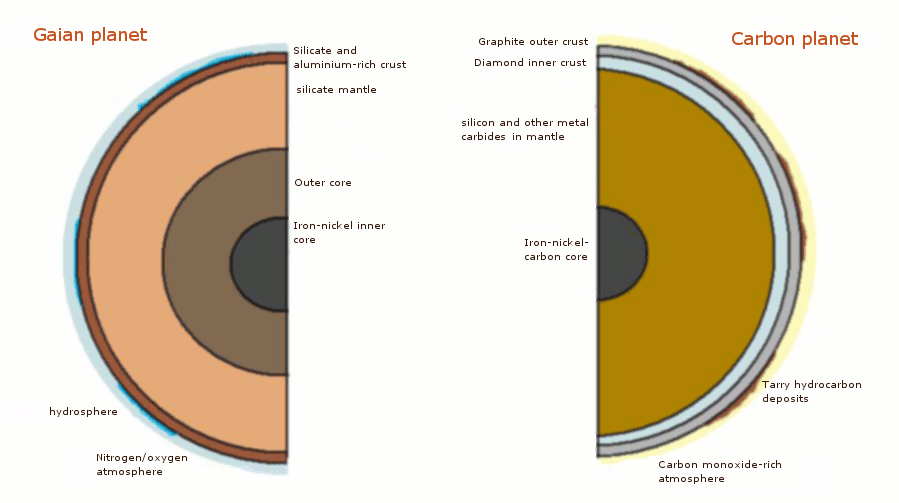 Image from Steve Bowers | |
| Adamean worlds - cross-section | |
These worlds have atmospheres largely composed of carbon monoxide, methane, and long-chain carbon compounds synthesized photochemically in their atmospheres. Indeed, this last substance often precipitates and evaporates on a carbon planet's surface, and seas and lakes of oil or tar-like substances often form.
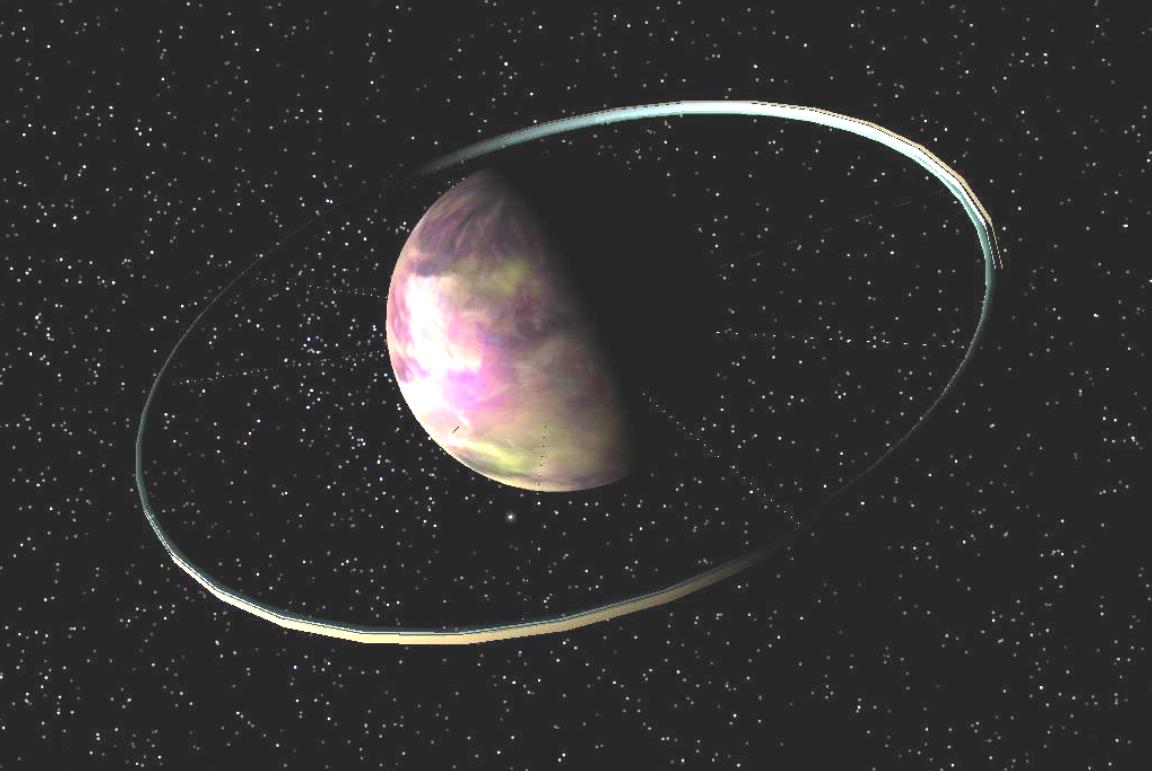 Image from Steve Bowers | |
| Solaris, a carbon world (Adamean type) has oceans of hydrocarbons and an atmosphere rich in organic compounds; there is, however, no life on this world. The planet is currently surrounded by a low-gravity Ribbonworld structure, mostly constucted from carbon nanomaterials. | |
Carbon worlds are typically less dense than Ferrinian worlds, and slightly less dense than Eugaian worlds, but denser than most waterworlds.
Alternative biochemistries sometimes emerge on adamean worlds, using hydrocarbons instead of water as solvent. These rarely develop beyond the prebiotic stage. One exception is the complex biosphere which has evolved on the world Uwa Mmanu, a large carbon world with multicellular heterotrophs and autotrophs.
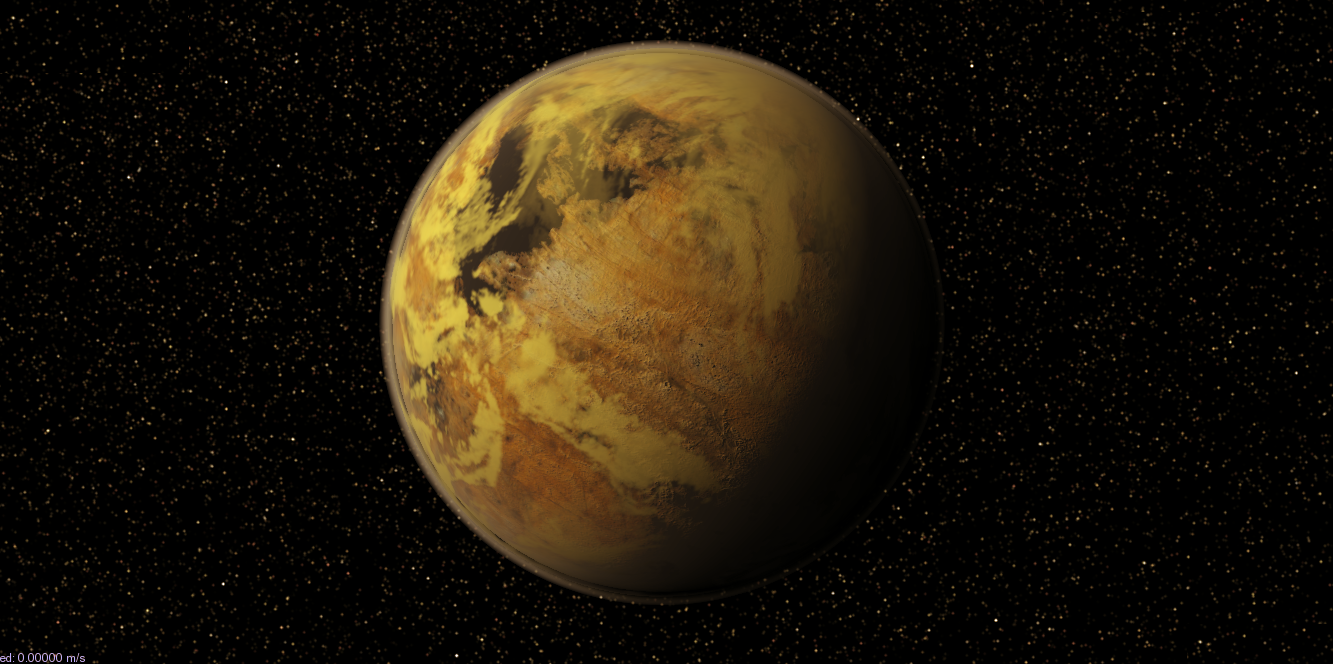 Image from Steve Bowers | |
| The carbon world Uwa Mmanu, a superterrestrial adamaean type planet | |
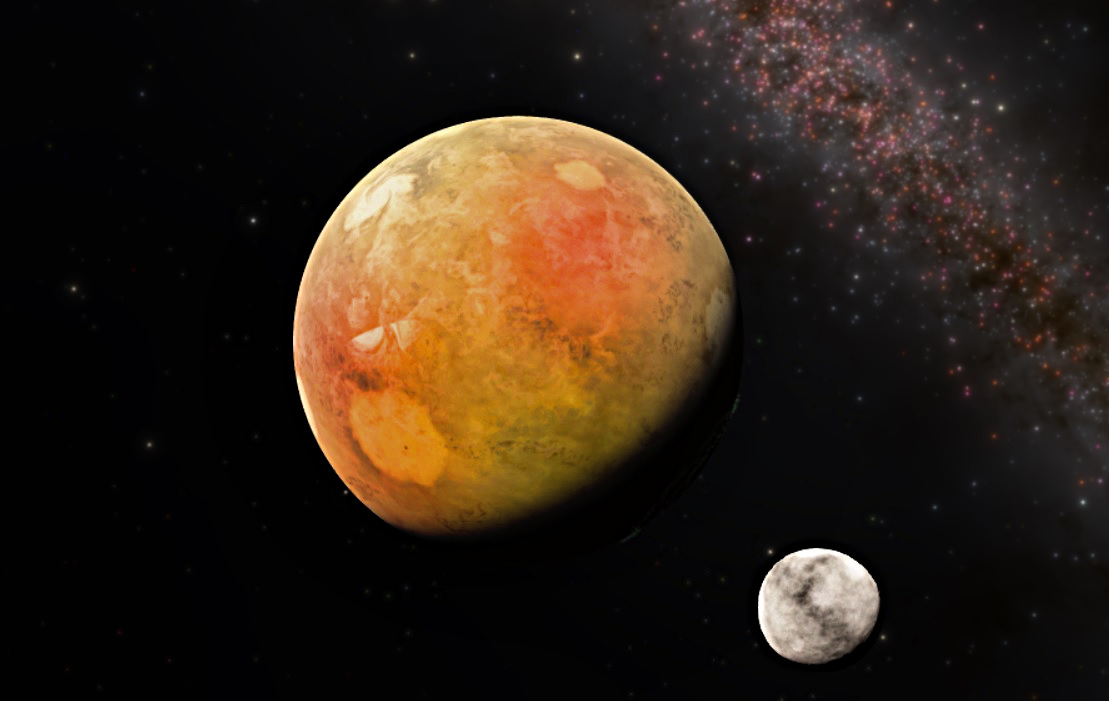 Image from Steve Bowers | |
| Labrayuh, a carbon world orbiting 61 Cygni B | |
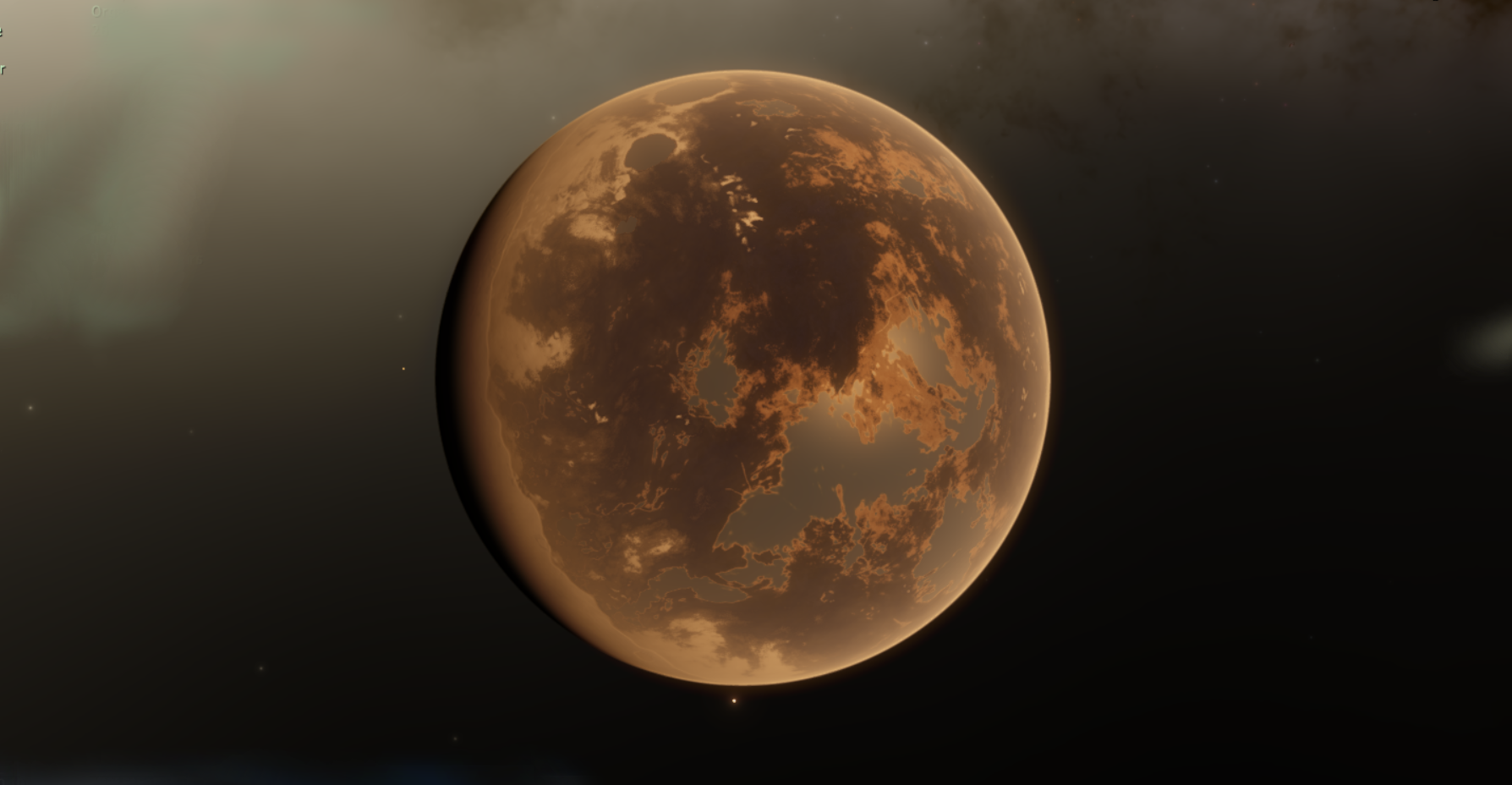 Image from Steve Bowers | |
| Konsheir - a temperate carbon world orbiting Glim. | |
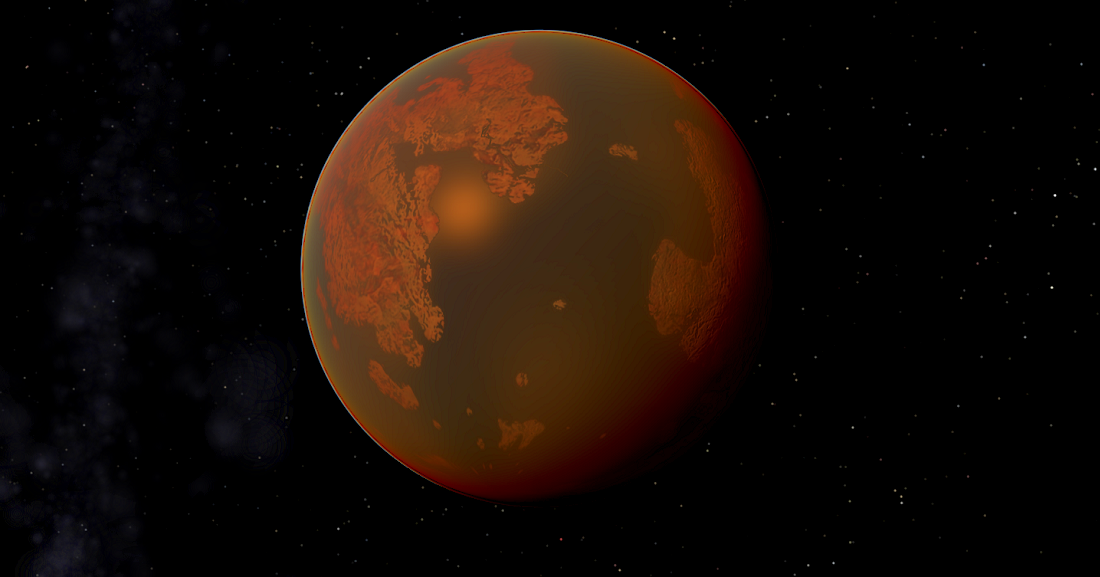 Image from Steve Bowers | |
| A image of the surface of the Petrolic world Globe, simulated with the cloud cover removed | |
Related Articles
Appears in Topics
Development Notes
Text by John M. Dollan and Steve Bowers
Acknowledgements to Martyn Fogg for his assistance and suggestions
Initially published on 18 November 2008.
Acknowledgements to Martyn Fogg for his assistance and suggestions
Initially published on 18 November 2008.






