
BY LETTER
CTC Wormhole

Technology > Application > Metric Engineering
Science > Physics
Technology > Technology Type or Material > Space-Time Engineering
Science > Physics
Technology > Technology Type or Material > Space-Time Engineering
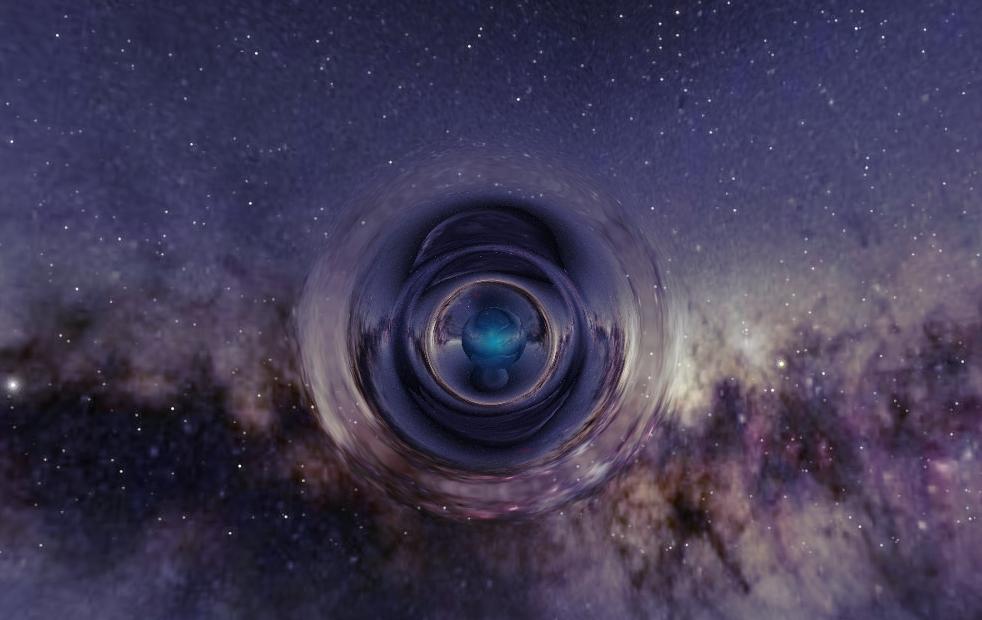 Image from Steve Bowers |
A wormhole that forms part of a loop of wormholes enabling a closed timelike curve (CTC). Such wormholes lose stability and cease to function. For this reason wormhole networks must be arranged with care.
The design of the Wormhole Nexus of the Inner Sphere
word 1Related Articles
- Chronology Protection - Text by Anders Sandberg
The universe seems to counteract attempts to produce time machines, for example due to Visser decay and related vacuum phenomena undermining other forms of time communication. Although the strict Chronology Protection Conjecture by the information age physicist Hawking was subsequently disproved, the chronology protection theorems of Lang, Picard and Joel-5 showed that this tendency can be explained from the consistency theorems, information physics and (eventually) vacuum physics. - Closed Timelike Curve - Text by Anders Sandberg
A closed path through spacetime that is timelike. A CTC would correspond to a possible way of time travel or time communication. However no closed timelike curves have ever been observed to exist. - Wormhole Bus
- Wormhole Nexus, The
- Wormhole Termini
- Wormholes - A Layman's Guide
- Wormholes - Cultural Factors
Appears in Topics
Development Notes
Text by Anders Sandberg
Initially published on 07 January 2002.
Initially published on 07 January 2002.






