
BY LETTER
EuJovian Type

Cool gas giants, with clouds predominantly consisting of ammonia | |
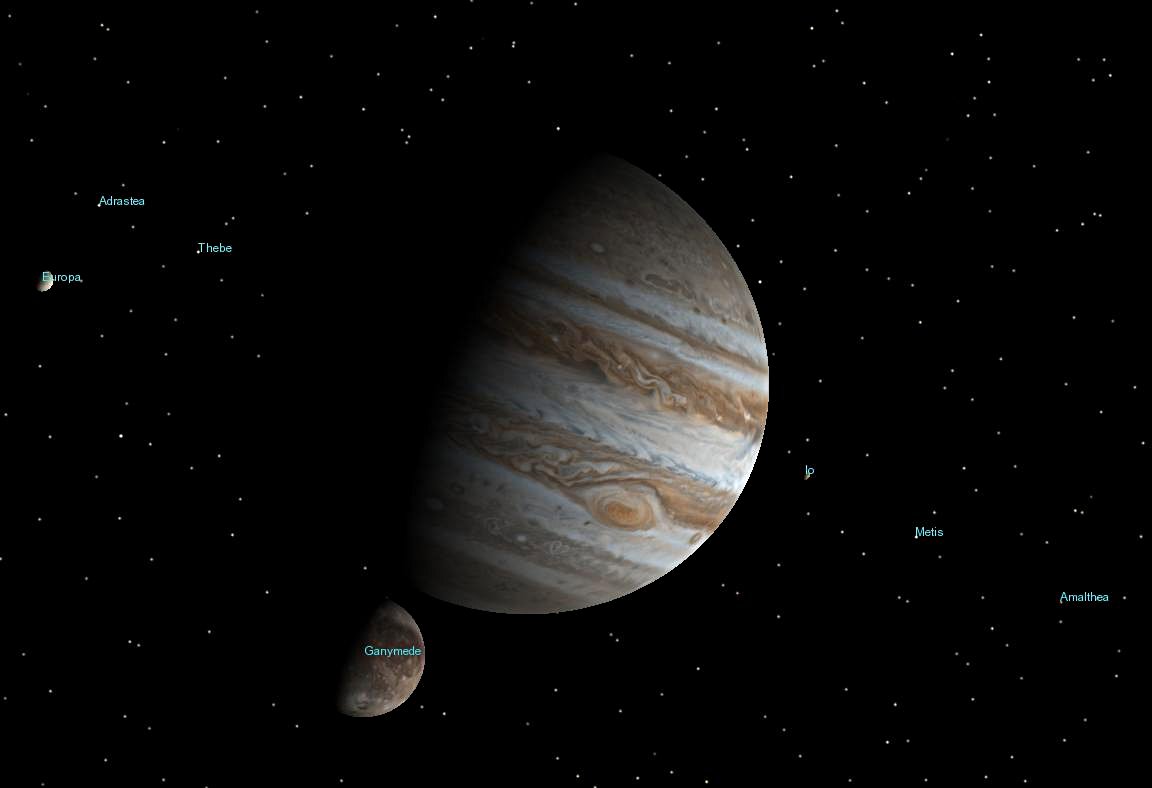 Image from Steve Bowers | |
| Jupiter, an archetypal EuJovian (although this world has a somewhat unusually dry atmosphere) | |
Major Type of gas giant world.
The temperatures of these worlds range around -123 degrees Celsius, allowing for the formation of ammonia ice crystals stained by complex condensates of carbon and sulfur, which are constantly being formed by solar radiation. Because of this, the typical color of these worlds is yellow-brown, while banding occurs in the atmosphere due to high rotational rates, although that banding's visibility may be obscured by a uniform upper atmospheric haze. Typical albedos range around 0.57.
Example Jupiter
Other Eujovian worlds
 Image from Steve Bowers | |
| Zeus | |
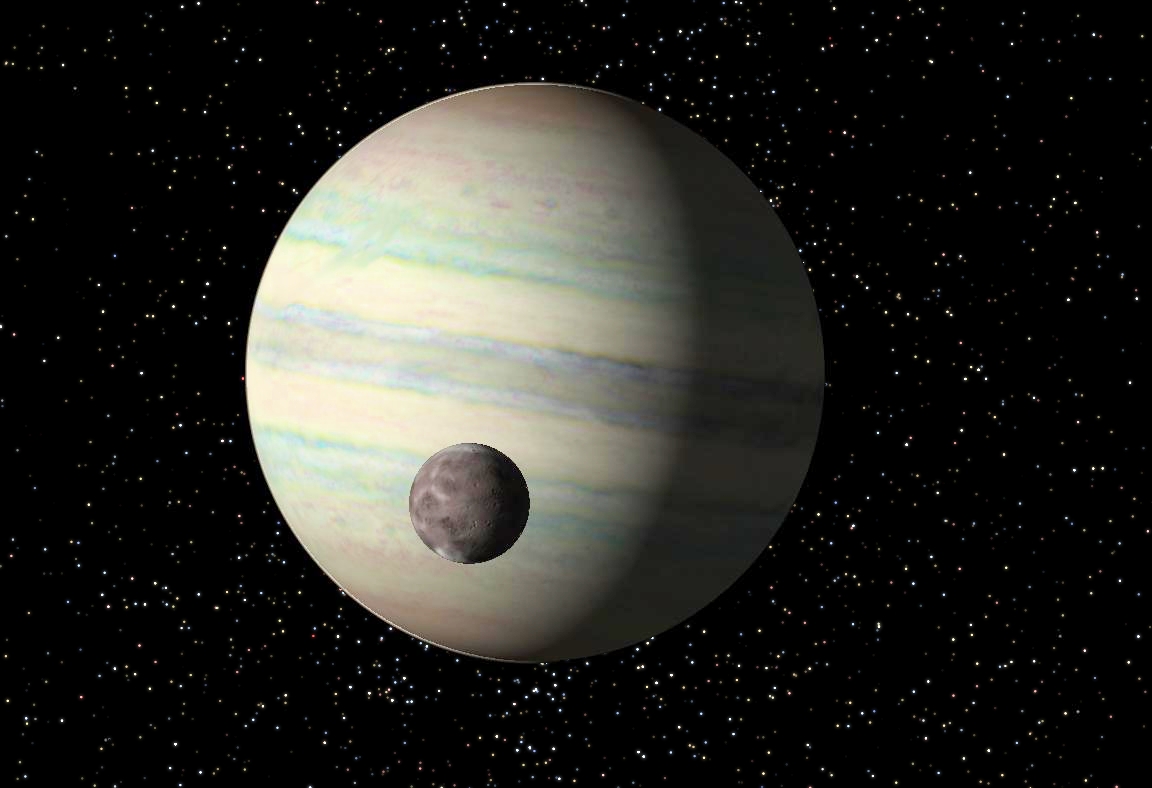 Image from Steve Bowers | |
| Natasha (Zeta1 Reticuli system) | |
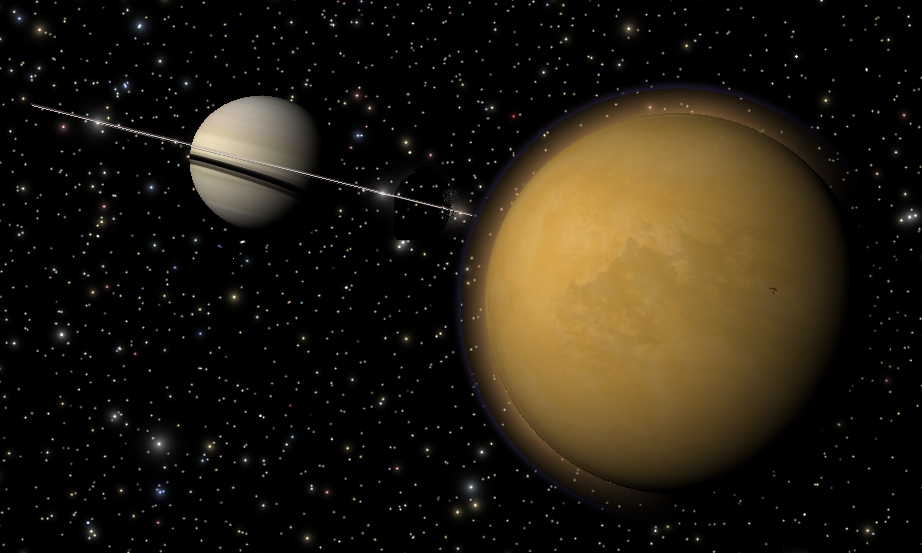 Image from Steve Bowers | |
| Saturn (with its moon Titan in the foreground) | |
Related Articles
Appears in Topics
Development Notes
Text by John M. Dollan in his Planet Classification List
Initially published on 24 October 2001.
Initially published on 24 October 2001.






